
Foundations That Support Long-Term Stability
Slab on Grade Foundations in Ocean Springs for new construction and additions requiring a stable base built to handle local soil and moisture conditions
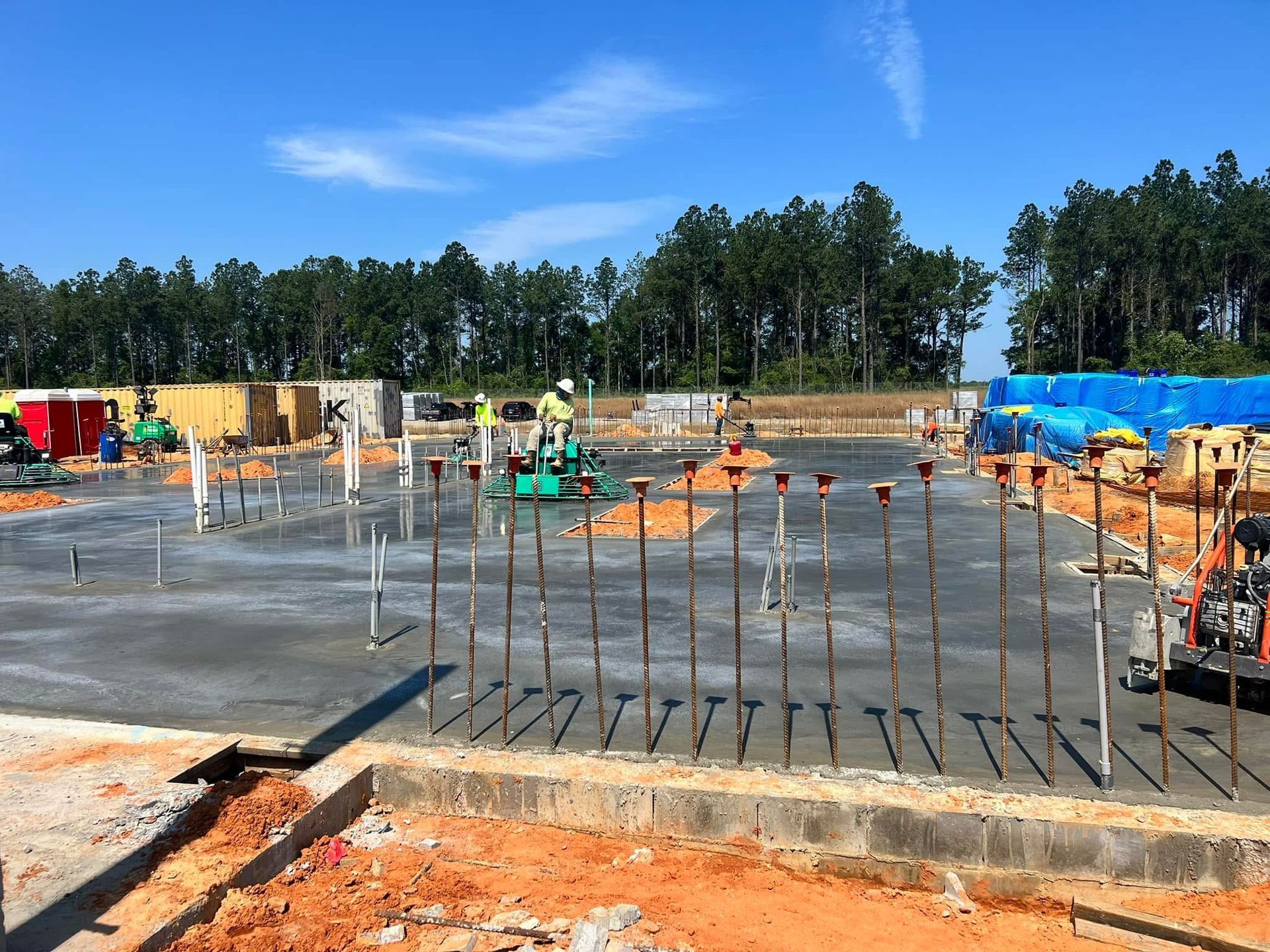
A slab on grade foundation consists of a single layer of reinforced concrete poured directly onto a prepared and compacted base, eliminating the need for a basement or crawl space. This approach works well in Ocean Springs where water tables and soil composition make deep excavations less practical and where coastal humidity levels demand careful attention to moisture barriers and site drainage. OS Concrete handles foundation installation for garages, room additions, and new residential builds where a reliable, long-lasting base is required to support the structure above.
Site preparation involves clearing vegetation, grading to establish proper elevation, and compacting the subgrade to eliminate soft spots that would allow differential settlement. A layer of gravel is spread and compacted to provide drainage beneath the slab, and a vapor barrier is placed to prevent ground moisture from wicking upward through the concrete. Reinforcement is positioned within the slab to distribute loads evenly and resist cracking as the structure settles into place and as seasonal temperature swings occur.
Arrange a site consultation to review grading and compaction requirements specific to your property's soil conditions.
What Stable Site Preparation Prevents
Compaction removes air pockets and increases the density of the base material, creating uniform support across the entire footprint of the slab. Without thorough compaction, voids remain beneath the surface, allowing sections of the slab to settle unevenly once the structure is loaded. OS Concrete uses compaction equipment rated for the depth and material type, confirming that each layer reaches the required density before the next layer is added or before the concrete is poured.
Once construction is complete, the foundation remains level without dips, cracks, or separation at joints where walls meet the slab. Doors and windows operate smoothly because the frame stays square, and floor finishes install without needing shims or leveling compound to correct uneven surfaces. The vapor barrier beneath the slab keeps moisture from migrating upward, which protects flooring materials and prevents the musty odor that often develops in structures built without proper moisture control.
The service includes site clearing, grading, base installation, vapor barrier placement, reinforcement, and concrete pouring, but does not cover utility trenching, extensive fill work for large elevation changes, or architectural design. Coordination with other trades, such as plumbers and electricians, ensures that conduits and lines are positioned correctly before the pour, avoiding costly rework later.
Answers to Common Foundation Questions
Understanding the factors that affect foundation performance helps clarify what goes into a successful installation.
What site conditions require additional preparation?
Properties with soft or organic soils may need deeper excavation and additional base material to reach stable subgrade, and sites with poor drainage may require perimeter drains to divert water away from the slab.
How thick should a slab on grade foundation be?
Residential slabs are typically poured at four to six inches thick, depending on the loads they will support, with thicker sections at load-bearing walls and thinner sections in non-structural areas.
Why is a vapor barrier important in Ocean Springs?
Coastal humidity and high water tables mean ground moisture is present year-round, and without a vapor barrier, that moisture can migrate through the concrete and damage flooring or create conditions favorable for mold growth.
When should reinforcement be upgraded?
Larger structures, those with heavy equipment, or properties with known soil movement issues benefit from upgraded reinforcement patterns that provide additional tensile strength and crack control.
What defines proper compaction?
Compaction is measured by density testing, which confirms that the base material has been compressed to a level that will not settle further once the structure and slab are in place.
OS Concrete coordinates project timelines to align with framing and other construction activities, keeping your build on track and avoiding delays. Schedule an initial meeting to discuss your project's foundation requirements and receive a detailed breakdown of site preparation and material specifications.